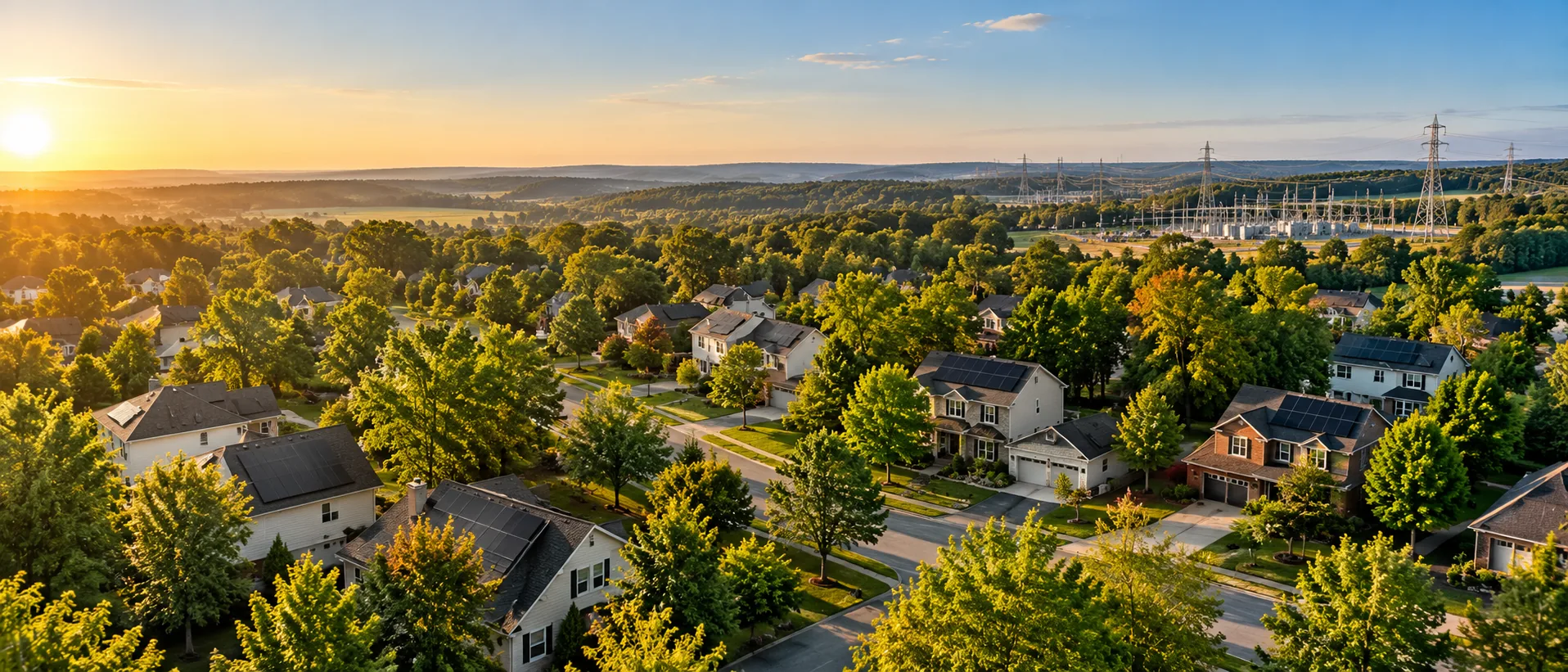

Your building is right for commercial solar when five things line up: a sound roof with room for panels, a structure that can carry them, electrical gear that can take the connection, a utility with room for the power, and a clear right to use the roof. Roof area alone doesn’t settle it. Work through this checklist first.1,2,3,4
A one-page checklist for the owner
Fill this in with your facilities team and the records you already have. It tells you whether a project deserves a closer look. It won’t approve a roof, an electrical design, a utility connection, or a tax position. The rows follow site-screening guidance from the Department of Energy and the National Laboratory of the Rockies, which was the National Renewable Energy Laboratory until its rename.1,2,3
Property: __________ Decision-maker: __________ Review date: __________
Mark each row documented, unknown, or blocked, and write down who will resolve it and by when.
| Check | Evidence to gather | Hold off on commitments when | Notes: who and by when |
|---|---|---|---|
| Roof age and condition | Installation date, inspection report, repair history, planned roof work | Leaks, wear, or a coming replacement are unresolved | __________ |
| Structural capacity | Building drawings and an engineer’s review of the proposed layout | Capacity is unchecked or strengthening is unresolved | __________ |
| Usable sun exposure | Shade assessment and a layout showing equipment and access areas | Shade or rooftop obstructions leave the usable area uncertain | __________ |
| Electrical service and gear | Existing electrical drawings, equipment records, proposed connection point | The connection design or required upgrades are unconfirmed | __________ |
| Utility capacity | Utility feedback on the proposed system and connection | Studies, capacity limits, or upgrade responsibilities are open | __________ |
| Tariff and load | Bills, rate schedule, interval usage data, planned operating changes | The analysis assumes every bill charge falls with solar output | __________ |
| Ownership and lease rights | Roof control, lease term, meter account, written consent | The decision-maker can’t authorize use of the roof | __________ |
| Insurance and contracts | Insurer’s requirements, lender conditions, who pays for removal | Required approvals or risk allocation are open | __________ |
| Deadline feasibility | A schedule covering design, permits, utility work, inspection, and tax review | The business case rests on an unconfirmed completion date or credit | __________ |
“Documented” means you can show the record. “Unknown” means someone has to go find out. “Blocked” means a condition has to clear before you sign. Missing drawings call for a closer look, but a landlord who refuses roof access is a harder stop: it ends the rooftop option for that building, though not necessarily for your other sites.
The technical rows come from Department of Energy and national laboratory guidance. The roof-control and insurance rows come from a 2022 Department of Energy Better Buildings webinar, where a solar developer presented the lease material.1,2,3,5,4
Is my roof suitable for solar panels?
A suitable commercial roof has usable sun exposure, a sound covering, and a structure that can carry the proposed system. Roof age is a starting point, not a pass or fail. Have a roofer and a structural engineer look at the actual building before you treat any rooftop layout as workable.1,6,7
Treat it as three separate questions. Is the roof covering ready? Can the structure carry the design? How much useful area is left once everything else is subtracted?
Start with the installation date and the record of leaks, repairs, and planned replacement. A qualified roofer can tell you what work should happen before installation. On age, the national laboratory’s trainer calls a new roof with a 25-year warranty the ideal, and says it’s acceptable to build on a roof with a shorter warranty or service life than that, as long as the owner understands there will be a cost to take the panels down when that roof is replaced.6 Our guide on whether to replace your roof before going solar walks through that tradeoff for a house, and the logic carries over to a commercial roof.
The structural review has to cover the specific equipment and the site’s conditions. The Department of Energy’s guidance, written for federal facilities, says to judge a roof on compatibility, structural strength, age, and wind exposure, and its design pages also cover snow and wind.1
Then there’s area. Neighboring buildings, trees, and rooftop equipment cut into it, and a satellite photo can’t show how much. The national laboratory’s training adds that a roof needs room for emergency and first-responder access and fire-code setbacks, so panels can’t cover every square foot.7 A site survey should map all of it.
A roof repair and a solar installation are separate scopes. Settle who is responsible for each, and in what order, before anyone mounts a rack.
Can the electrical service take a solar connection?
An open breaker slot doesn’t prove the panel can take solar. The electrical review has to find a workable connection point, check the condition and spare capacity of the gear, and plan the cable route. Give the assessor your drawings and equipment records, then let a qualified electrician or engineer say what the system needs.2
The national laboratory’s training flags these feasibility questions:
- What capacity is left in the electrical panel, and is the panel in good working order? The trainer’s point is that you don’t want to tie a large new system into an old panel.
- How far is the interconnection point from the system? A long wiring run adds cost.
- Is there space in the building for the new equipment without it getting in the way?
- If the panel is short on capacity, what are the fixes? The trainer lists surveying loads to free up breaker capacity, replacing the panel with a larger one, a line-side tap, and, as the most expensive option and a last resort, upgrading the electrical service. Each one carries a cost.2
Add any electric vehicle charging or other new loads you expect, because they change the answer. If chargers are in the plan, see commercial EV charger installation.
Building-side electrical work is also a separate matter from the utility’s connection decision. Whoever you hire, the proposal should spell out what your property needs.
Permits are part of the same track. Take Montgomery County as one example. Its Department of Permitting Services says a rooftop solar project needs two permits, a building permit for attaching the panels and an electrical permit for the connection to the building’s electrical service, and that both are applied for electronically. It says adequately prepared applications get first comments within 30 days.8 Other counties and municipalities run their own permitting, so ask the permitting office for the building’s address before you set a schedule.
Will the utility have room for your power?
A building that checks out physically can still run into utility limits. The Department of Energy’s screening guidance lists interconnection capacity, network configuration, electrical upgrades, and possible integration studies as items to check with the site’s utility. Settle those questions early, because a building that looks perfect on the roof can still be a poor fit on the wire.3
For large ground-mounted projects, the national laboratory’s training makes the same point plainly: a line next to your facility doesn’t necessarily have the capacity to take your power, and the utility that owns the line is the one that knows.3
Baltimore Gas and Electric (BGE) shows how local this is. Its technical interconnection quick reference guide, revision 1 dated June 4, 2024, says existing distribution circuit capacity is determined feeder by feeder.3 That describes BGE’s method. It says nothing about your address, so ask BGE whether a newer version exists and what it means for your circuit. If another utility serves your building, ask the same question there.
Write down the utility’s open questions, who has to answer each one, and whether the answer could change the design. A favorable site visit isn’t utility approval. For the full process, see our guide to commercial solar interconnection.
Does your electricity use line up with the sun?
Whether solar pays off depends on the load profile and the rate schedule, including energy, demand, and time-based charges. Before you accept any claim about bill reductions, get an analysis built on your actual rate schedule and interval data, not an average month.5
Energy charges track how much power you use. Demand charges track your peak, measured under the tariff’s rules. Time-of-use pricing changes the cost of a kilowatt-hour by when you use it. An average bill blurs all three. Our explainer on demand charges, solar, and batteries goes further.
Pepco’s Maryland tariff book (current cover update effective October 1, 2026) gives a concrete example. Schedule MGT LV II is a time-metered medium-size commercial schedule. It bills one rate per kilowatt-hour and a separate rate per kilowatt of demand, and the tariff sets who falls into it by peak demand or monthly energy use.5 Your own account may sit on a different schedule, and the name is printed on the bill.
The assessor should also separate power used on site from power exported, and check the export rules that apply to you. A large bill can still mean a poor fit if the peaks fall after sundown.5
Two hypothetical buildings show how the same checks come out differently. These are illustrations, not Soleil projects.
| Building and assumed situation | Question worth asking | What could change the answer |
|---|---|---|
| Office with weekday daytime occupancy | Does interval data show use overlapping solar production? | Hybrid work, weekend vacancy, or changing cooling loads |
| Restaurant with evening service and roof exhaust equipment | How much use happens before sunset, and how much roof is left? | Lunch service, refrigeration patterns, or equipment changes |
Who has to say yes in a leased building?
A big electric bill doesn’t settle who can build on the roof. Find out who controls the roof, who pays the bill, and who can approve the work. Then go through the lease, any consent requirements, and the remaining term with the property owner and your attorney before you settle on a layout or buy equipment.4
Roof access, equipment routes, and construction staging belong in that conversation. Put these questions to the owner, the tenant, and your legal counsel:
- Who owns the solar equipment, and which meter receives its output?
- Who grants installation and maintenance access?
- What happens if the tenant leaves, the property sells, or the roof needs work?
- Who pays for removal, reinstatement, and eventual decommissioning?
- Do lender or other property agreements require consent?
The Department of Energy Better Buildings webinar on commercial solar leasing, held March 15, 2022, lists roof age and roof control, the term of the tenant’s lease, debt on the property, the roofing manufacturer and warranty, and the insurance provider among the items to review. The slides on frequently negotiated lease provisions were presented by a solar developer, and they describe what is “typical” in that company’s deals: the landlord covers the cost to remove and reinstall the panels when the roof is replaced during the term, the landlord isn’t liable for structural upgrades, and the landlord is liable for lost energy revenue its own actions cause. The slides also say a landlord may ask the solar tenant to fund a decommissioning account.4 That is one developer’s view of common terms, not a rule, so settle each point in writing. Talk to your insurer or broker early, too, about how the system affects property coverage and liability.
Should you consider ground-mount or carport options?
Ground-mounted solar is worth a look when the roof has problems and you have usable land. It brings its own questions: land rights, zoning, soil, drainage, access, and the cable route. It still needs engineering, permitting, and a utility review. Moving off the roof doesn’t remove those steps.9
| Option | Why assess it | What to resolve |
|---|---|---|
| Rooftop | Uses building space without taking up separate land | Roof condition, structural capacity, shade, equipment access, and the connection route |
| Ground-mounted | Puts available land to use when the roof is limiting | Land use, soil, drainage, environmental limits, cable route, and the utility connection |
| Carport | Covers parking while it generates | Vehicle access and clearance, fire lanes, and its own structural and site review |
On carports, the Department of Energy’s screening guidance gives a plain example of a fatal flaw: a parking lot with too much truck traffic may not suit one. Its checklist also calls for reviewing access with the fire marshal and planning protective bollards.9
How does the 2027 deadline affect the decision?
If your business case counts on the federal commercial solar credit, schedule matters as much as the building. As of October 25, 2026, Public Law 119-21 ends the section 48E credit for solar facilities placed in service after December 31, 2027, if their construction began after July 4, 2026.10 The table shows where a project stands.
| Project status | What the law says | What to keep |
|---|---|---|
| Construction began after July 4, 2026 | Placed in service by December 31, 2027, or no section 48E credit10 | Records of inspection, commissioning, and utility permission to operate |
| Construction began on or before July 4, 2026 | The end-of-2027 cutoff doesn’t apply, but the other section 48E conditions, including the beginning-of-construction rules, still do10,11 | Dated proof that construction really started |
| Start date unclear | Plan on the later-start rule until a tax adviser says otherwise | Contracts, invoices, and records of physical work |
What counts as being “placed in service” is a tax question. For the section 48E credit, the Treasury regulation says a qualified facility is placed in service in the earlier of the taxable year its depreciation period begins or the taxable year it is placed in a condition or state of readiness and availability to produce electricity.12 The regulation text doesn’t mention utility permission to operate. Build inspection and utility approval into the schedule anyway, and let your tax adviser set the date. Don’t commit to a date around a tax credit until a tax professional has checked it.
What counts as a construction start has been in dispute. On June 6, 2026, a federal district court in Washington, D.C. vacated IRS Notice 2025-42, which had set the beginning-of-construction requirements for wind and solar facilities, and sent the matter back to the IRS.11 Ask your tax adviser which guidance applies to your project today.
Equipment sourcing is a separate gate. Public Law 119-21 restricts the credit for facilities that receive material assistance from a prohibited foreign entity, and IRS Notice 2026-15 gives interim guidance on those restrictions and on the records that support them.13 Your tax professional can tell you which sourcing records to collect before equipment is ordered. Our commercial solar tax credit deadline guide goes through the deadline in more detail.
Roof repairs, structural findings, permits, equipment lead times, and utility work can all push a schedule. A signed proposal or an equipment delivery doesn’t mean the project will finish on time or qualify.
What should a site survey give you?
Ask for a written assessment that separates confirmed findings from assumptions and open decisions. It should tie the roof, structure, shading, electrical, utility, and ownership findings to a proposed scope, and name who has to resolve each unknown. A good site visit alone isn’t project approval.1,2,3,4
Our guide to the solar consultation and site survey covers what to expect on the day. To prepare:
- Gather records. Pull a full year of bills, any interval data, roof records, building drawings, and the lease.
- Name the decision-makers. List the owner, the bill payer, the facilities contact, the insurer or broker, and any legal or tax advisers.
- Arrange qualified access. Have the assessor coordinate roof and electrical access with whoever is responsible for site safety.
- Request a findings register. Each constraint, its evidence, the person responsible, and the next decision.
- Reconcile the proposal. Check which findings changed the design, which work is excluded, and which approvals are still open.
Soleil Energy’s utility-scale solar page describes an engineering, procurement, and construction (EPC) service whose scope lists interconnection and commissioning.14
Bring the completed checklist and your records. Request a proposal or call (301) 953-4140.
Solar savings and incentive eligibility depend on your roof, your usage, your utility, and your tax situation. Incentive programs change and some have limited funding. We are not tax advisors — we will review your bill with you and tell you what you may qualify for. Confirm any tax credit with a qualified tax professional.
Sources (14)
-
U.S. Department of Energy, “Life Cycle of Photovoltaic Systems: Install and Commission a Photovoltaic System,” roof and structural considerations. Undated current page, written for federal facilities; read October 25, 2026. ↩ ↩2 ↩3 ↩4 ↩5 ↩6
-
Same training module as 6, on the interconnection point, panel condition, spare capacity, wiring distance, and equipment space. Current page, read October 25, 2026. ↩ ↩2 ↩3 ↩4 ↩5 ↩6
-
U.S. Department of Energy, “Life Cycle of Photovoltaic Systems: Procure a New Photovoltaic System”, undated current page; the training module at 6; and Baltimore Gas and Electric, “Quick Reference Guide to Technical Interconnection Requirements”, revision 1 dated June 4, 2024, page 4. All read October 25, 2026. ↩ ↩2 ↩3 ↩4 ↩5 ↩6 ↩7 ↩8
-
U.S. Department of Energy Better Buildings webinar, “Commercial and Industrial: State of the Market and Solar Lease Best Practices,” March 15, 2022, due-diligence and lease-provision slides (Internet Archive copy captured August 17, 2025, read October 25, 2026; the original Department of Energy server currently fails its security certificate check). The lease slides were presented by a solar developer (Black Bear Energy Inc.); presenter material, not legal or insurance advice. ↩ ↩2 ↩3 ↩4 ↩5
-
National Laboratory of the Rockies, “Interpreting Utility Bills: Rate Data”, undated current page; the Department of Energy guidance at 3; and Pepco, Maryland electric tariff book, current update effective October 1, 2026, schedule MGT LV II, page 7 (issued August 14, 2026). The National Laboratory of the Rockies page and the Department of Energy guidance read October 24 and 25, 2026; tariff read October 25, 2026. ↩ ↩2 ↩3 ↩4
-
National Laboratory of the Rockies (formerly the National Renewable Energy Laboratory), “Training Module 3 (Text Version),” roof-life considerations. Undated current page; read October 25, 2026. ↩ ↩2 ↩3 ↩4 ↩5
-
Same training module as 6, on shading, usable area, and first-responder access. Current page, read October 25, 2026. ↩ ↩2
-
Montgomery County Department of Permitting Services, Commercial Solar Building permit process. Undated current page; read October 25, 2026. ↩
-
U.S. Department of Energy, install and commission guidance and procurement guidance, on rooftop, ground-mounted, and carport considerations. Undated current pages; read October 25, 2026. ↩ ↩2
-
Public Law 119-21 (enacted July 4, 2025), section 70513, subsections (a) and (g)(5): section 48E(e)(4) provides that the section does not apply to qualified property of a wind or solar facility placed in service after December 31, 2027, applying to facilities whose construction begins after the date 12 months after enactment (July 4, 2026). Read October 25, 2026. ↩ ↩2 ↩3
-
U.S. District Court for the District of Columbia, Oregon Environmental Council v. Internal Revenue Service, Document 50, memorandum opinion dated June 6, 2026 (copy hosted by CourtListener). Read October 25, 2026. ↩ ↩2
-
26 CFR 1.48E-2(b)(2), placed in service, qualified facility, Electronic Code of Federal Regulations, current text. Read October 25, 2026. ↩
-
Internal Revenue Service, Notice 2026-15, interim guidance on material assistance from a prohibited foreign entity (2026 notice); and Public Law 119-21, section 70513(b)(1), adding 26 USC 48E(b)(6). Read October 25, 2026. ↩
-
Soleil Energy, utility-scale solar service page. Current page, read October 25, 2026. ↩